

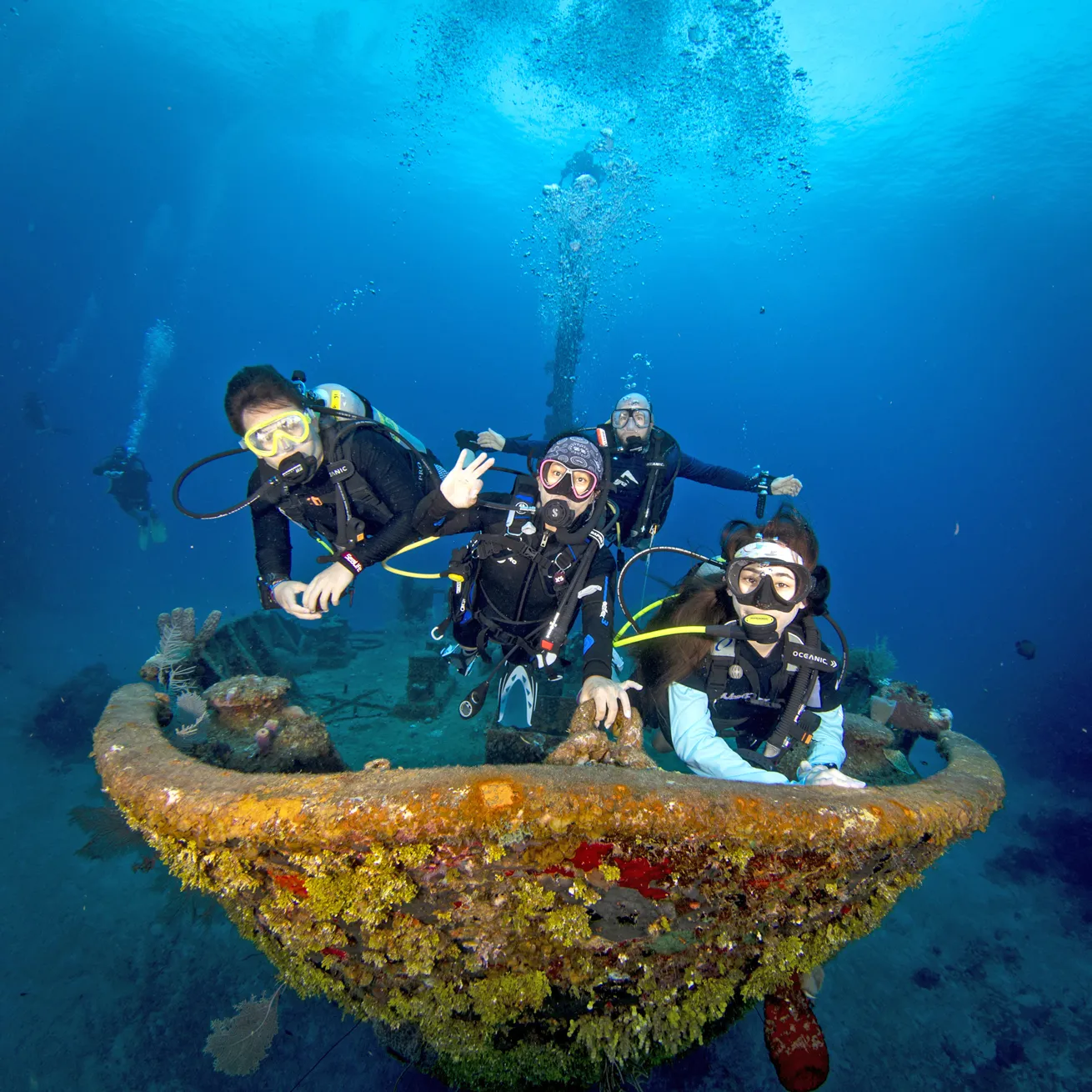
Courtesy Kids Sea CampKids have fun while learning important underwater skills.
Parents who dive hope that their kids will find the same joy in the sport that they do, but they might not realize that scuba can also teach responsibility—both in the water and in life. In particular, PADI has made the Junior Rescue Diver and Junior Divemaster courses available to kids ages 12 and 15, respectively, provided they are already Open Water certified.
Margo Peyton, owner of Kids Sea Camp, a company specializing in family-centric dive vacations, says, “Parents often hear about the rescue course and get overwhelmed by the thought of their child rescuing someone—they think it’s too much responsibility.” Peyton explains that the course is designed with younger, often smaller divers in mind. “The course is definitely not overwhelming. Most of all, it creates a sense of confidence.”
Related Reading: 5 Tips for Buying Scuba Gear for Kids
**1. Accountability **
“Kids at this age are amazing at following directions,” says Peyton. When they’re given the directive to stay shallower than the dive guide or instructor, they do. But long term, this trains them to focus on someone else rather than trust in themselves and their ability to read gauges and a watch.
“This course empowers them to feel like they can be responsible not only for themselves, but also be beneficial to a buddy,” says Peyton.
After they’ve finished the certification, they become more aware of how deep and how long they’ve been down. Plus, they help their buddies stay on track.
“They’re even signing [underwater] to ask their moms and dads how much air they have,” says Peyton.
2. Leadership/Being of Service
These two certifications are the first for younger divers to instill the importance of leading others and being of service. A big part of both certifications is the repetition of best dive practices, such as helping other divers perform gear checks and assisting them with entries, exits and underwater tours. Kids learn the value of situational awareness and how to demonstrate 24 basic scuba skills in an understandable manner. At this junior level, they can’t directly supervise divers, but they get to assist certified divemasters and instructors.
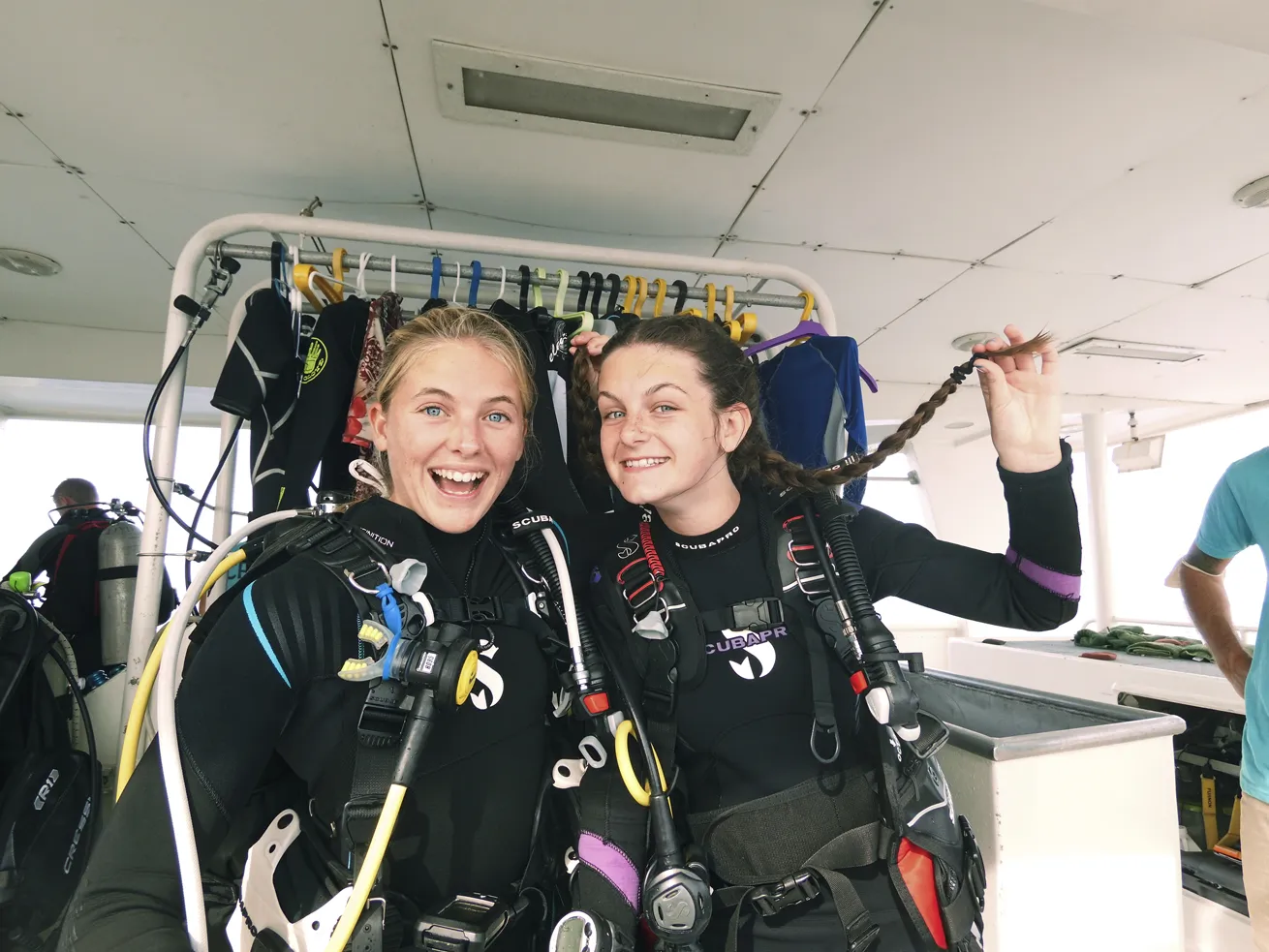
Courtesy Kids Sea CampThe PADI Junior Rescue Diver and Junior Divemaster courses instill confidence in younger divers.
3 PUBLIC SPEAKING
The Junior Divemaster course requires that the kids give three dive briefings and debriefings. This helps them learn the material in a deeper way so that they can explain it to others clearly. It also encourages them to get more comfortable speaking in front of a small group.
4. College Credits
Most students know they can get college credit for AP and advanced-level high school classes. They may not realize that their dive certifications, including Junior Divemaster, can also count as college credits due to the degree of leadership necessary to earn them.
In many cases, the credits are offered to students who are studying environmental science, marine biology or another field related to the ocean and what’s in it. However, students majoring in psychology and cybersecurity have also received credit.
“I always have my [Kids Sea Camp] kids check with the administration to see if they can get extra credit,” says Peyton.
5. College Scholarships
“Hundreds of Kids Sea Camp kids have gotten scholarships,” says Peyton.
Related Reading: A Kids Camp for All Ages in Hawaii
The amount ranges based on the school, and they’re merit-based, so no strings are attached. However, what Peyton has seen most commonly among the KSC network is that the kids who have taken Junior Rescue, Junior Divemaster and additional leadership certifications are getting the biggest numbers.
“Colleges are looking for diversity—anything that makes a student more unique, stronger and more likely to succeed is of interest,” she says.
“Scuba diving creates that.”


