

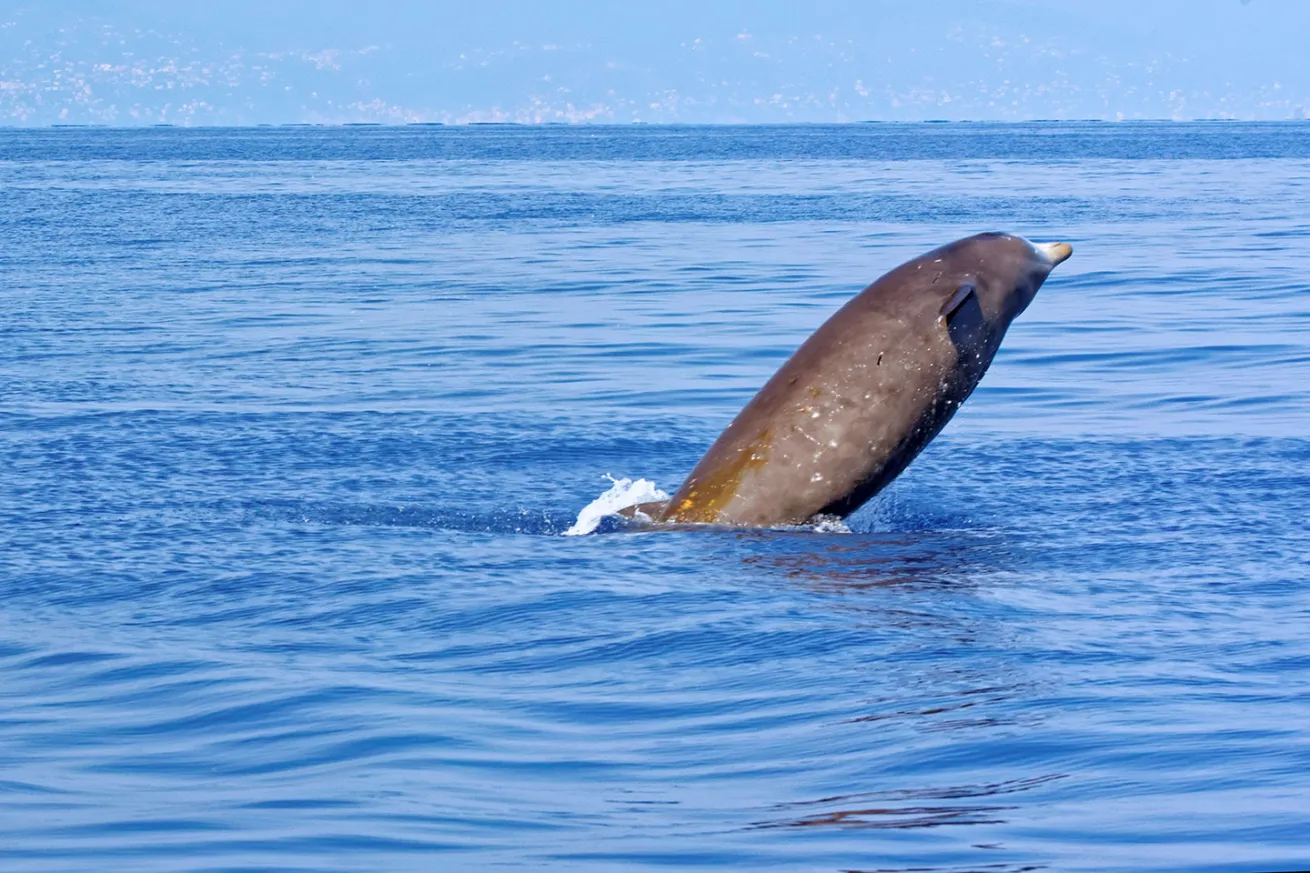
iStock/Heiti PavesCuvier's beaked whales, which can grow up to about 22 feet long, typically eat squid and various species of deep-sea fish. A Cuvier's beaked whale that stranded multiple times off Norway was found to have 30 plastic bags and a large amount of microplastics in its stomach.
A distressed Cuvier's beaked whale that was euthanized after repeatedly stranding off the Norway coast had 30 plastic bags wedged inside its stomach, researchers say. Numerous press outlets reported the story, including Sky News.
Scientists tried to save the 20-foot male Cuvier's beaked whale when it was first discovered in shallow waters off the island of Sotra, near Bergen, Norway.
Once it was determined that the whale was too sick to be saved, it was euthanized and turned over to the University of Bergen for an autopsy. The post-mortem examination revealed its intestines were completely blocked with plastic bags and other items of plastic, veterinarian Terje Lislevand of Bergen University told Sky News.
"The (whale's) stomach was full of plastic," Lislevand said, adding that its intestine "had no food, only some remnants of a squid's head in addition to a thin fat layer."
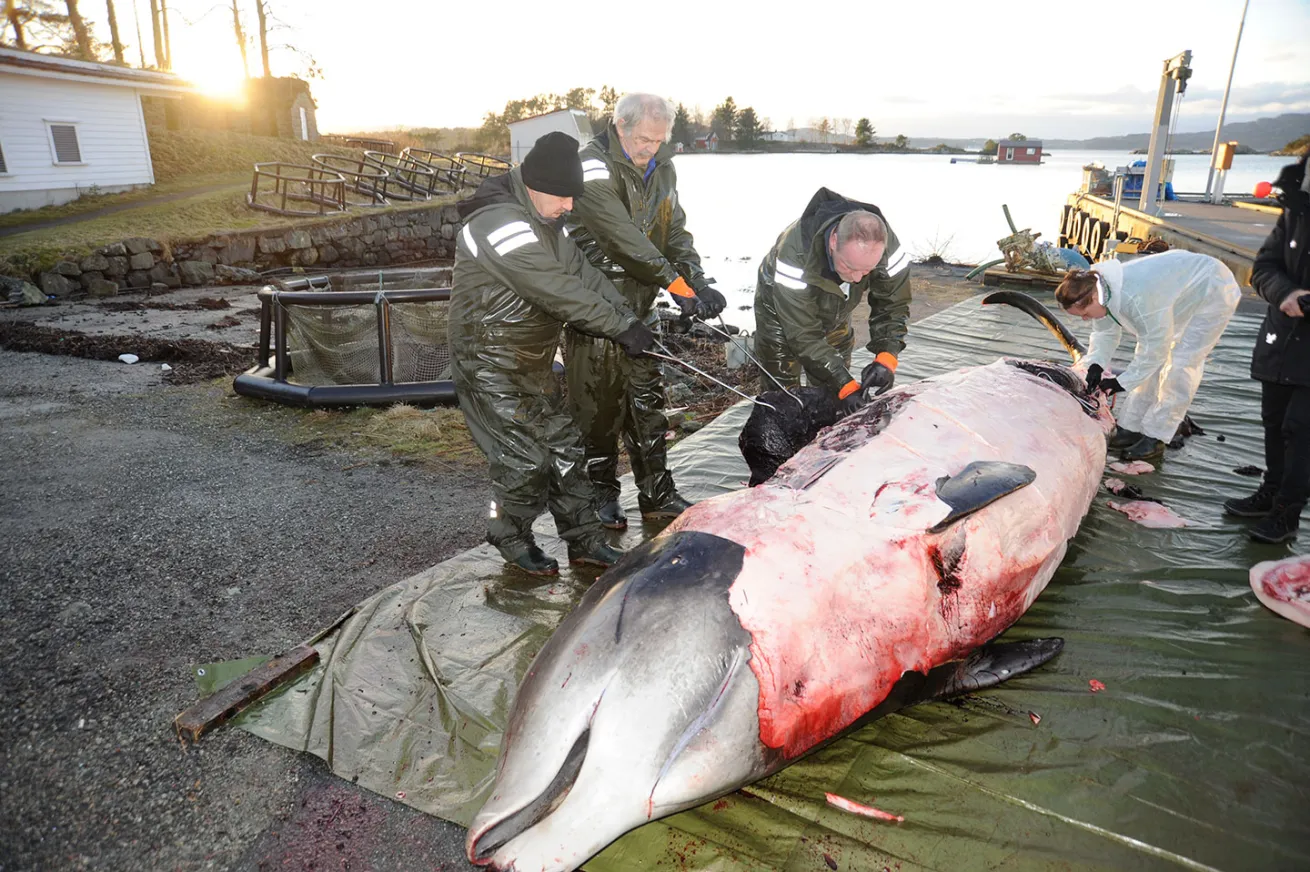
Courtesy University of BergenResearchers from the University of Bergen begin dissecting the Cuvier's beaked whale.
Lislevand says the non-biodegradable waste was "probably the reason" the whale repeatedly beached itself.
“It wasn’t like it was in just part of the stomach,” Lislevand told Sky News. “It filled up the whole space. It’s the explanation of why the animal acted so strange and stranded.”
Lislevand said he believes the animal was in serious pain for a long time.
“I’m afraid to estimate how long it could have taken before his stomach was totally full,” he said. “In this case, the plastic particles accumulated and created a barrier in the system.”
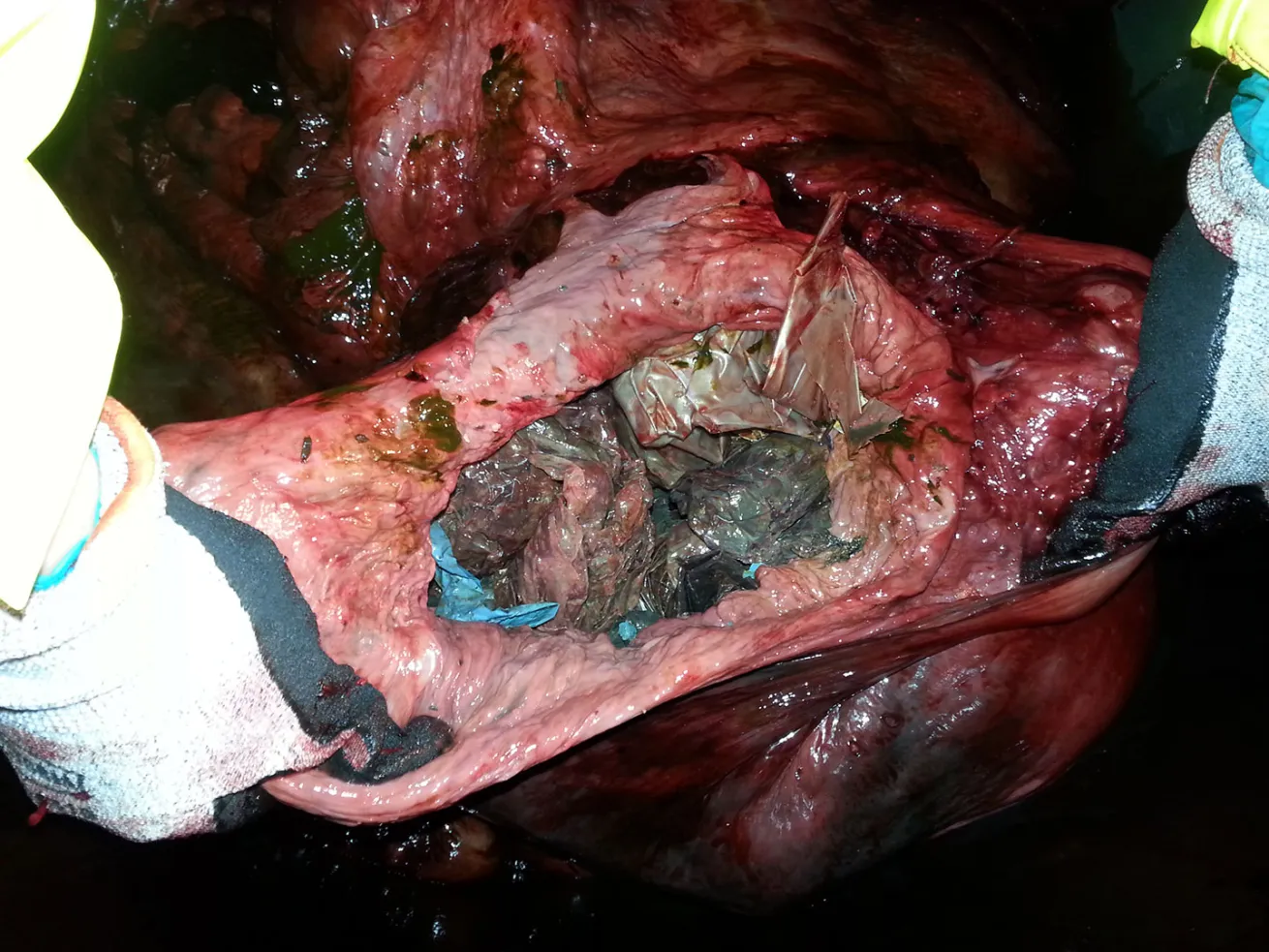
Courtesy University of BergenA post-mortem examination revealed the whale's intestines were completely blocked with plastic items, preventing it from feeding.
Lislevand said the whale clearly would have been in great distress, its insides clogged. "The plastic was like a big ball in the stomach and filled it almost completely," Lislevand told Bergens Tidende.
Curvier's beaked whales are not normally found in the waters off Norway. Lislevand told Bergens Tidende that the animal was likely the first whale of the species to be documented off Norway. An estimated 80,000 are in the eastern tropical Pacific, nearly 1,900 are off the west coast of the United States (excluding Alaska), and more than 15,000 are off Hawaii.
Cuvier's beaked whales are also known as goose-beaked whales. Scientists have documented the whales diving up to 9,816 feet — nearly two miles — and spending more than two hours underwater before resurfacing.
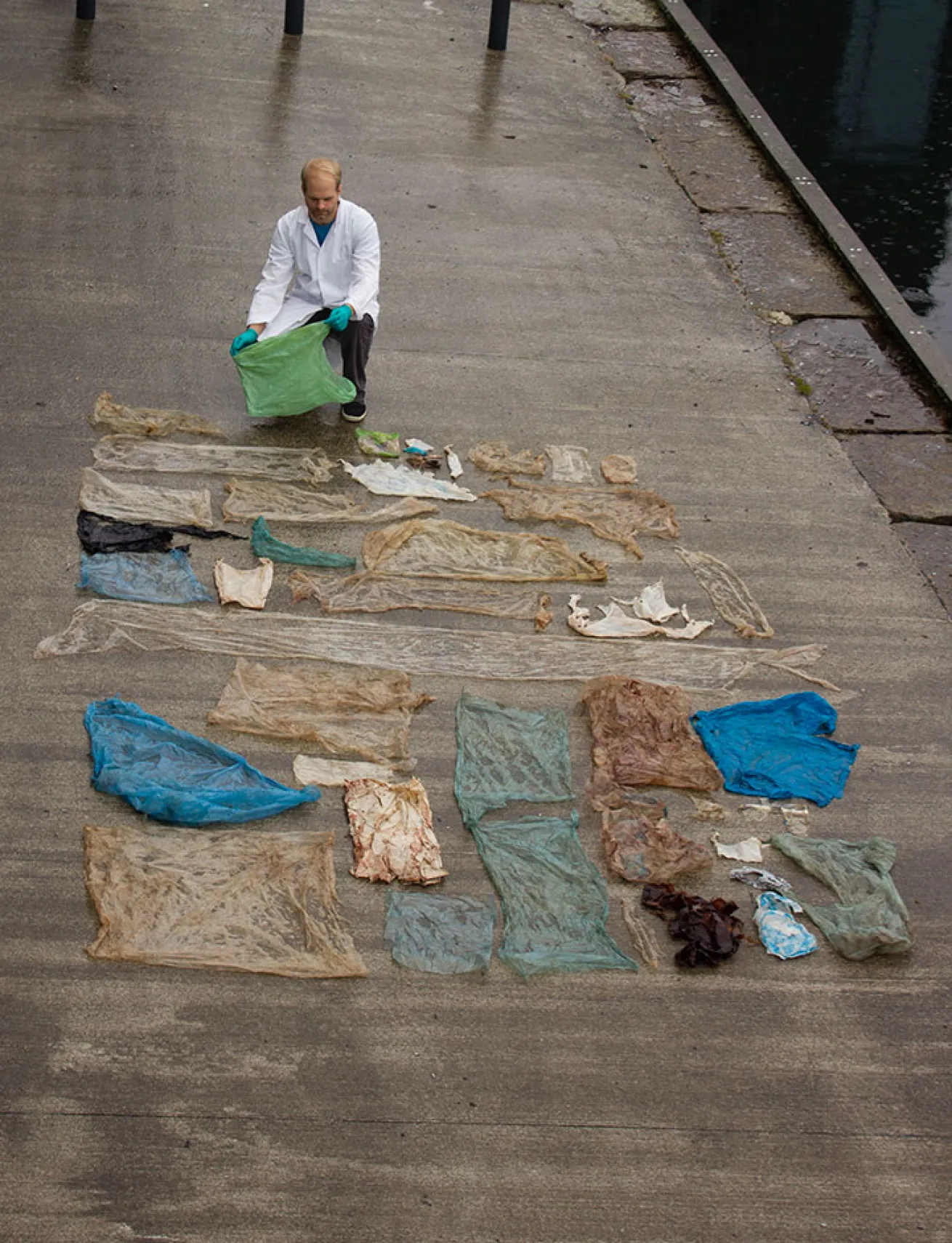
Courtesy University of BergenResearchers laid out the bags and other plastic items found in the euthanized whale's intestines.
Beaked whales in general may also be sensitive to ocean noise, research has found. A higher incidence of strandings has been recorded in noisy seas such as the Mediterranean, and multiple mass strandings have occurred following operations by the Spanish Navy.
About Sky
Sky launched Ocean Rescue campaign to raise awareness of the damage being caused to our marine environment worldwide by single-use plastics.


